
QUICK ANSWER
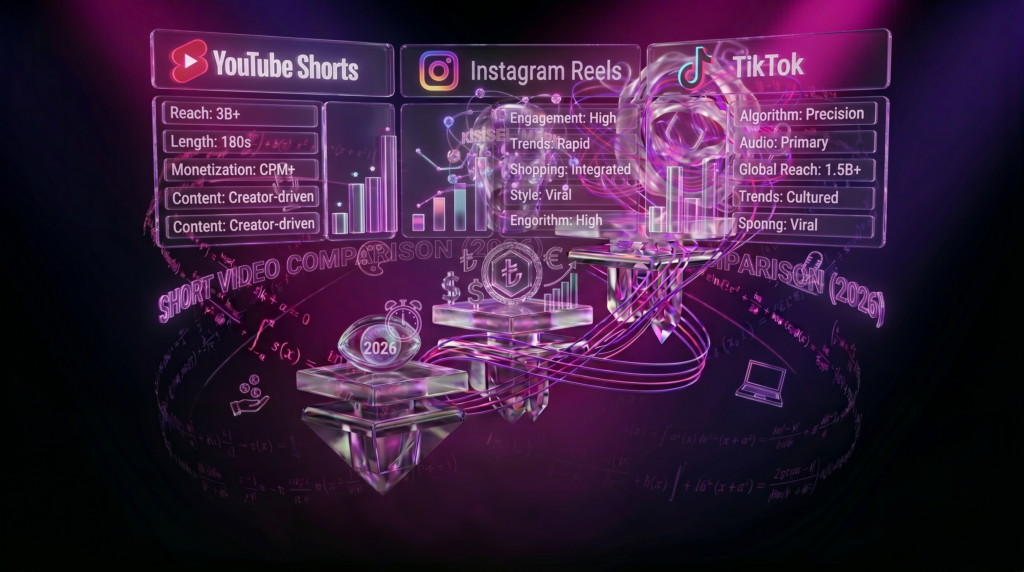
The short video format represents the most valuable currency in the attention economy. However, saying 'we're making short videos' doesn't count as a strategy for brands. YouTube Shorts, Instagram Reels, and TikTok have different algorithms, audience behaviors, and content lifespans.
The short video format represents the most valuable currency in the attention economy. However, saying “we’re making short videos” doesn’t count as a strategy for brands. YouTube Shorts, Instagram Reels, and TikTok have different algorithms, audience behaviors, and content lifespans. To understand why feeding all three platforms with the same content is inefficient, the fundamental logic of each first needs to be understood.
TikTok: Still the Most Powerful Engine of Organic Discovery
TikTok’s For You Page algorithm shows content not to an existing follower pool, but to foreign users with matching interest profiles. This means content from a zero-follower account can also reach millions of views. The large portion of TikTok’s user base in Turkey is concentrated between the ages of eighteen and thirty-five, and the platform surpasses competitors in daily average session time.
In terms of content type, the formats that best perform on TikTok are: native content built on trending sounds, short dramas with high entertainment value, practical how-to guides, and platform-specific interaction formats like stitch and duet. For brand-related content to succeed on TikTok, brand messages must be organically integrated into the native format; content that smells like advertising receives algorithmic penalties.
Content lifespan on TikTok is variable: a successful video can go viral even weeks later, while low-performing content can become invisible within a few hours. This volatility contains both opportunity and risk.
Instagram Reels: Carrying the Power of an Existing Audience to New Users
Instagram Reels generates lower organic reach compared to TikTok; however, its capacity to create synergy with the existing follower base is different. The Reels algorithm shows content to both existing followers and relevant new users. This hybrid structure opens the door to reaching new audiences while strengthening the relationship with the existing community.
Reels’ strength lies in the completeness of the platform ecosystem. A Reels content can appear in the feed, Explore, and the home page Reels tab simultaneously. In addition, product tag integration and direct commerce connections can be established with Instagram Shopping infrastructure. In Turkey, Instagram still carries a clear penetration advantage over TikTok among users above thirty-five years old. Reels is strategically important for brands targeting this demographic.
Successful content types on Reels: aesthetic and visually high-quality lifestyle content, knowledge-dense short videos replacing educational carousels, product experiences in real use context, and trend videos with strong musical appeal.
YouTube Shorts: Long-Term SEO and Channel Integration
YouTube Shorts structurally distinguishes itself from competitors: every short video is tied to a YouTube channel. This connection provides the opportunity to direct viewers to the channel’s long-form content and benefits from YouTube’s powerful SEO foundation. Since Turkey’s YouTube user base covers both young and adult demographics, Shorts provides access opportunities across a wide age range.
Content lifespan on YouTube Shorts is longer compared to competitors. A Shorts video addressing a search-focused topic can continue to be recommended by the YouTube algorithm for months. This feature creates a powerful long-term content asset for brands producing educational content (how-to, product usage guide, category knowledge).
Its disadvantage is that the platform’s short video algorithm has a slower adoption curve compared to TikTok and Reels. The number of users in Turkey who use Shorts as their primary discovery channel is more limited compared to the other two platforms.
Content Lifespan Comparison
The average attention lifespan of content on TikTok is twenty-four to forty-eight hours. Viral content can dramatically exceed this period; however, for “average” content this window is valid. On Instagram Reels, content lifespan is generally forty-eight to seventy-two hours, but saves and shares can cause the algorithm to continue recommending the content for longer. On YouTube Shorts, this duration can be measured in months; Shorts videos with well-optimized titles and tags can continue appearing in search results for months.
This content lifespan difference directly affects investment decisions. TikTok makes sense for instant campaigns or trend responses. YouTube Shorts is appropriate for building a permanent educational content library. Instagram Reels is the right channel for strengthening community bonds and feeding the commerce funnel.
User Behavior: Decisive Data in Platform Selection
There is a noteworthy age segmentation in short video consumption in Turkey. In the eighteen to twenty-five age group, TikTok is clearly the primary platform. Between twenty-five and forty, TikTok and Instagram Reels have close usage rates to each other. In the forty-plus group, Instagram is still dominant, with YouTube in second place. This demographic reality shows that brands without a clear audience profile need to adopt a multi-platform strategy.
Platform preference also differs by category. Fashion and beauty: Instagram Reels is strong, TikTok stands out in organic reach. Food and recipes: TikTok is a format conducive to native content. Technology and electronics: YouTube Shorts has an advantage for long-term SEO. Sports and fitness: equally strong across TikTok and Reels. Finance and corporate: LinkedIn-supported YouTube Shorts is more effective.
Which Brand Should Prioritize Which Platform?
For a brand with budget constraints, feeding all three platforms with equal strength is inefficient. The following framework is sufficient for prioritization:
If the median age of the target audience is thirty-six and below, TikTok is the first priority. If concentrated between twenty-five and forty-five and the commerce objective is strong, Reels is the first priority. If the target audience is spread across a wide age range and an educational content strategy is the priority, YouTube Shorts is valuable as an additional channel.
The optimal strategy is to produce high-quality, platform-specific content on the selected primary platform and position the other two platforms as complementary channels where the primary content is adapted. Uploading the same video to all three platforms means being condemned to average performance on all three.
Kara Talent’s Multi-Platform Content Management
In short video campaigns run within Kara Talent, platform selection starts with target audience analysis and campaign objective. The brand first determines its dominant platform; then a brief specific to that platform’s format is prepared. If parallel briefs are being created for different platforms, a separate content creator profile is defined for each platform — an influencer’s performance on TikTok and their performance on Reels are often different. This platform customization enables the campaign to reach its true potential on every channel.
Content Timing by Understanding Platform Algorithms
The algorithm of all three platforms processes the publication time of content differently. On TikTok, the engagement rate in the first six hours determines how aggressively the content will be fed to the FYP. To achieve high engagement in this window, “prime time” windows between 7-9 a.m. and 7-11 p.m. Turkey time are preferred. On Instagram Reels, the effect of publication time is less dramatic compared to TikTok; the algorithm tests content over several days and begins recommending it again as the save/share rate increases. On YouTube Shorts, 6-8 a.m. and 12-2 p.m. provide the highest visibility in the subscriber stream. Adding publication time specifications to the influencer brief noticeably improves organic reach especially in TikTok campaigns.
Content Reuse Strategy for Short Videos
A short video content doesn’t have to live on only one platform. A vertical video produced for TikTok can also be carried to Instagram Reels and YouTube Shorts with appropriate format adaptation. However, this transfer is not blind copying, but requires conformity with the platform’s native features: the TikTok logo/watermark must be completely removed, an Instagram-specific hashtag set should be added, and title and description for YouTube Shorts should be written in an SEO-compatible manner. When the raw video file delivery and brand-side platform adaptation clause is added to the influencer brief, three platform values can be obtained from a single content production investment. This approach increases campaign effectiveness especially during periods requiring budget optimization.
